
1. About TRAVOGUE
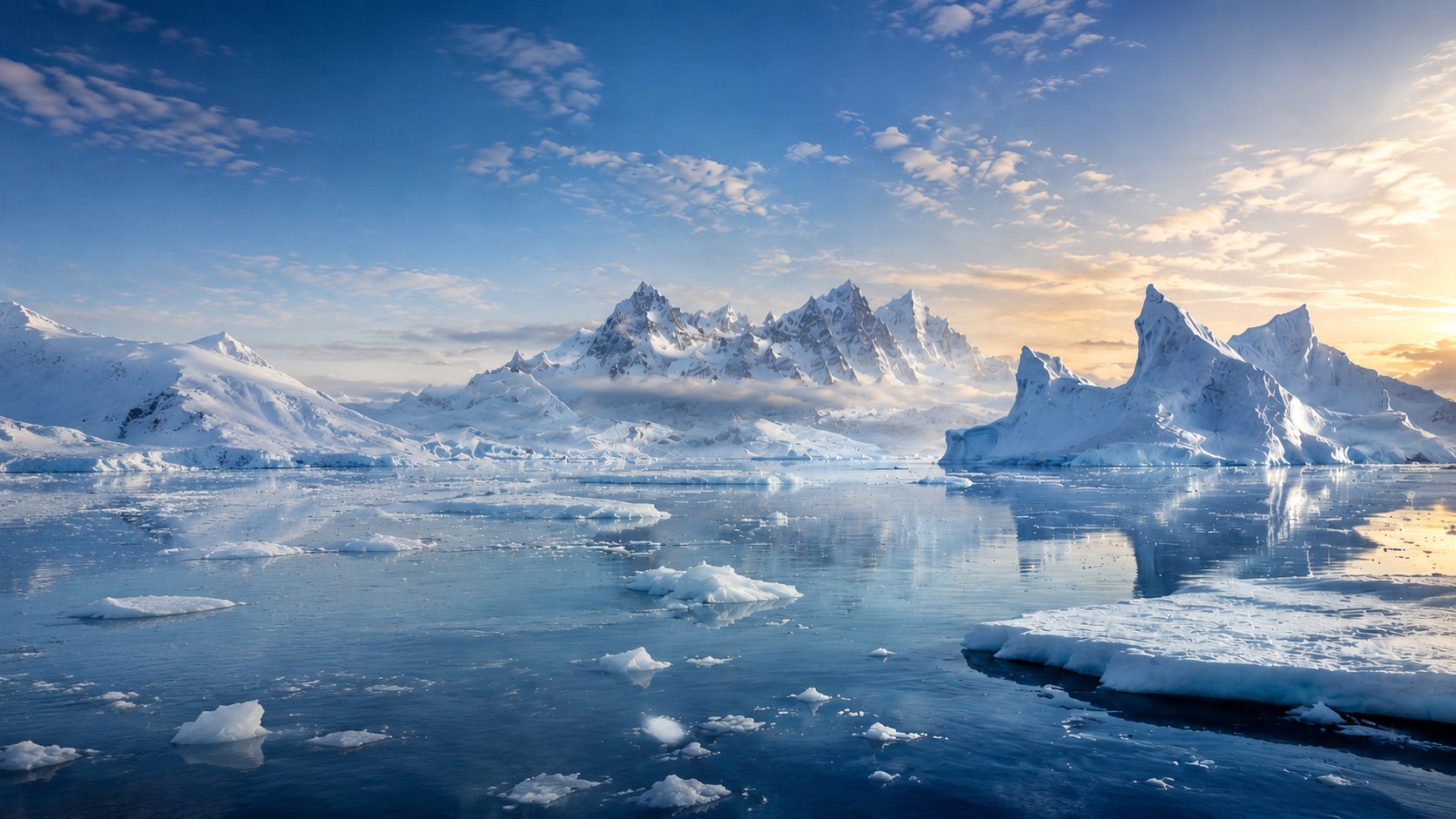
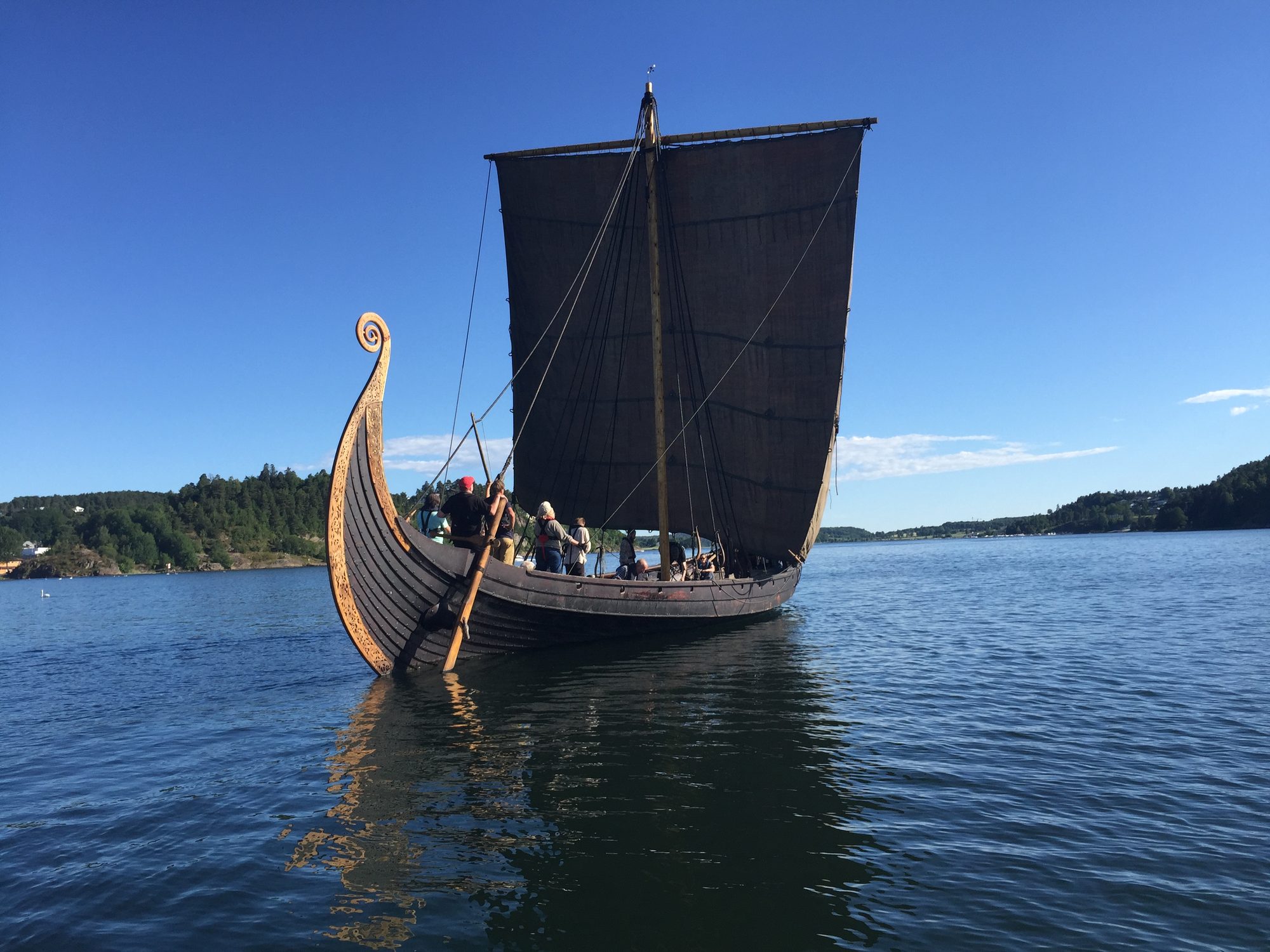
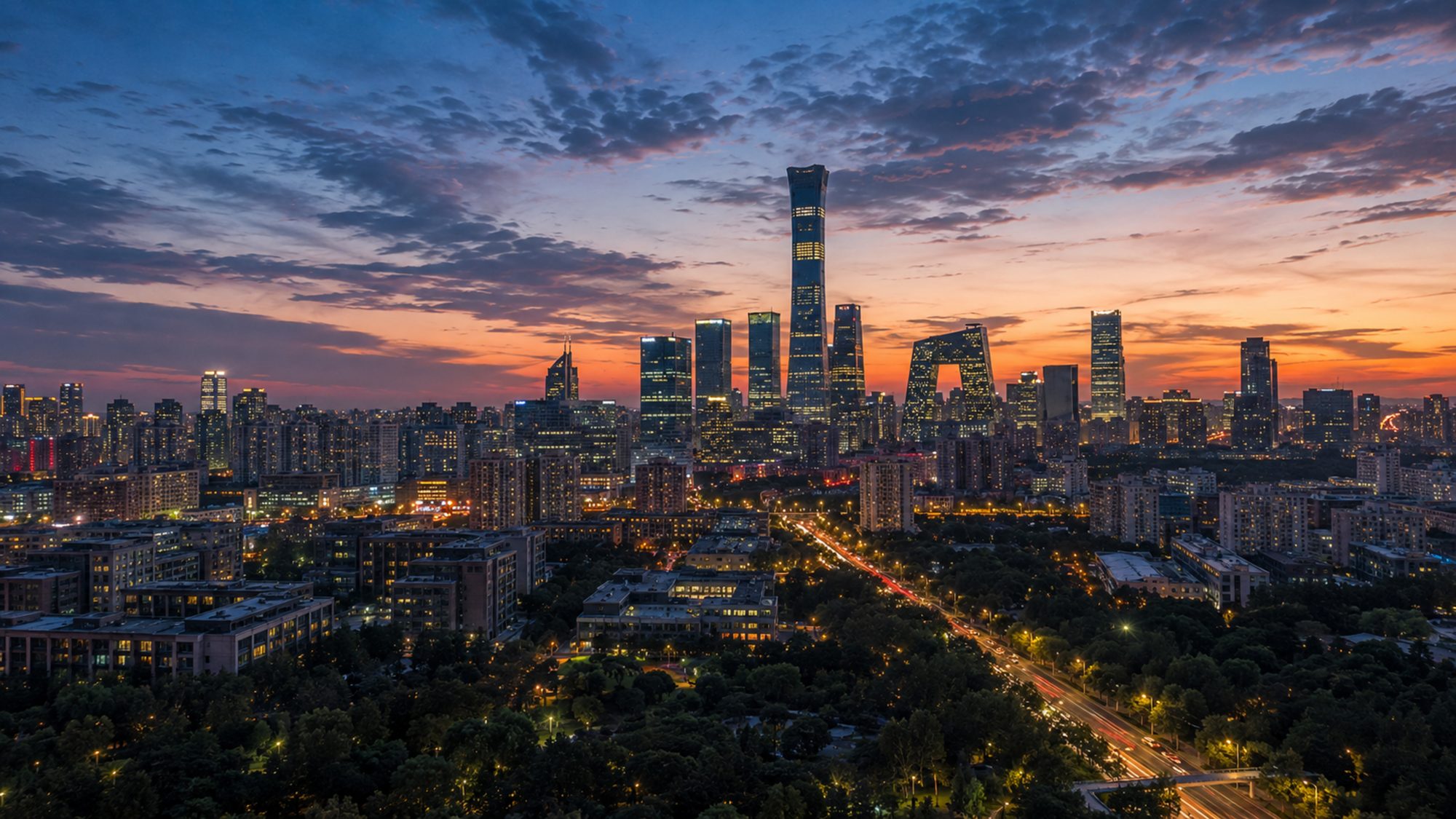
TRAVOGUE was founded in 2008, is headquartered in Beijing and has subsidiaries in Switzerland and Norway. We are one of the few travel companies in China with more than 18 years of dedicated experience in polar and in-depth expedition travel. Our programs cover the Antarctic and Arctic, Northern Europe, South America, Africa and other premium destinations worldwide.
We were among the first companies in China to promote Antarctic and Arctic travel systematically. From 2008 to 2020, TRAVOGUE was the General Sales Agent (GSA) for Hurtigruten in mainland China; its expedition cruise business has since been renamed HX Expeditions.
We pioneered full-ship Antarctic charters and have taken more than 5,000 travelers to the polar regions. We ran China’s first round-the-world group tour covering both the Antarctic and the Arctic. We have worked with celebrities such as Gao Xiaosong (a well-known Chinese music producer and host) and Nicholas Tse (a Hong Kong singer and actor), with television programs including Xiaoshuo (a popular Chinese talk show) and Chef Nic (a celebrity food and travel show), and with bands such as Escape Plan (a Chinese rock band). In 2017 and 2019 we hosted the China Polar Tourism Forum – Antarctic Summit and the China Polar Tourism Forum – Arctic Summit, both organized by the China Tourism Association. Since 2023 we have run tailor-made Antarctic and Arctic programs each year with tourism associations, business schools and other partners.
Over the years we have built deep, first-hand destination resources. We keep tight control of service quality, the fine details and emergency response, and we respond quickly — something our guests consistently praise.
We do not do whistle-stop sightseeing. We focus on in-depth expedition and nature travel. The differences: (1) we hold our own resources on the ground, rather than subcontracting from others; (2) the brands we represent — Hurtigruten, HX Expeditions, Oceanwide Expeditions, Quark Expeditions, Antarctica21, Aurora Expeditions, Seabourn and more — are all established global expedition and luxury cruise brands, so quality is assured; (3) we are committed to sustainable travel, and every journey includes an environmental education element.
TRAVOGUE is a member organization of the Polar Committee of the China Association for Scientific Expedition and maintains close communication with the Polar Research Institute of China. We are also a member of the Norwegian Business Association (NBA) and a partner of Visit Norway.
2. Antarctic & Arctic Travel
The Antarctic season runs from October to March, the southern hemisphere summer. Sea ice retreats, temperatures are relatively mild and wildlife is active.
- October to November (early summer / ice-breaking season)Temperatures of about -10°C to -5°C. Snow and ice cover is complete, and blue ice and ice shelves are at their most spectacular. Penguins are courting, nest-building and incubating eggs, and polar birds are becoming active. Visitor numbers are low and prices relatively good value, which suits travelers who want quiet, pristine ice and snow landscapes.
- December to January (high summer / peak season)Temperatures of -5°C to 5°C, close to 24 hours of daylight, and the best sailing and landing conditions. Penguin chicks hatch, and whales and seals appear frequently. The scenery is at its richest, which makes this ideal for families, first-time visitors to Antarctica and anyone after the complete polar experience. The trade-offs are more visitors and higher prices, so book well ahead.
- February to March (late summer / wildlife season)Temperatures are still comfortable. Penguin chicks are growing and molting, and the chances of seeing humpback whales and orcas are at their highest. Less pack ice means smoother sailing and easier landings. There are fewer visitors than at peak season and prices ease slightly, which makes this a favorite with photographers and wildlife enthusiasts.
The best time for the Arctic is June to September. Each period has its own landscapes and wildlife activity.
- Mid-June to mid-JulyA kingdom of ice and snow, and Arctic wildlife
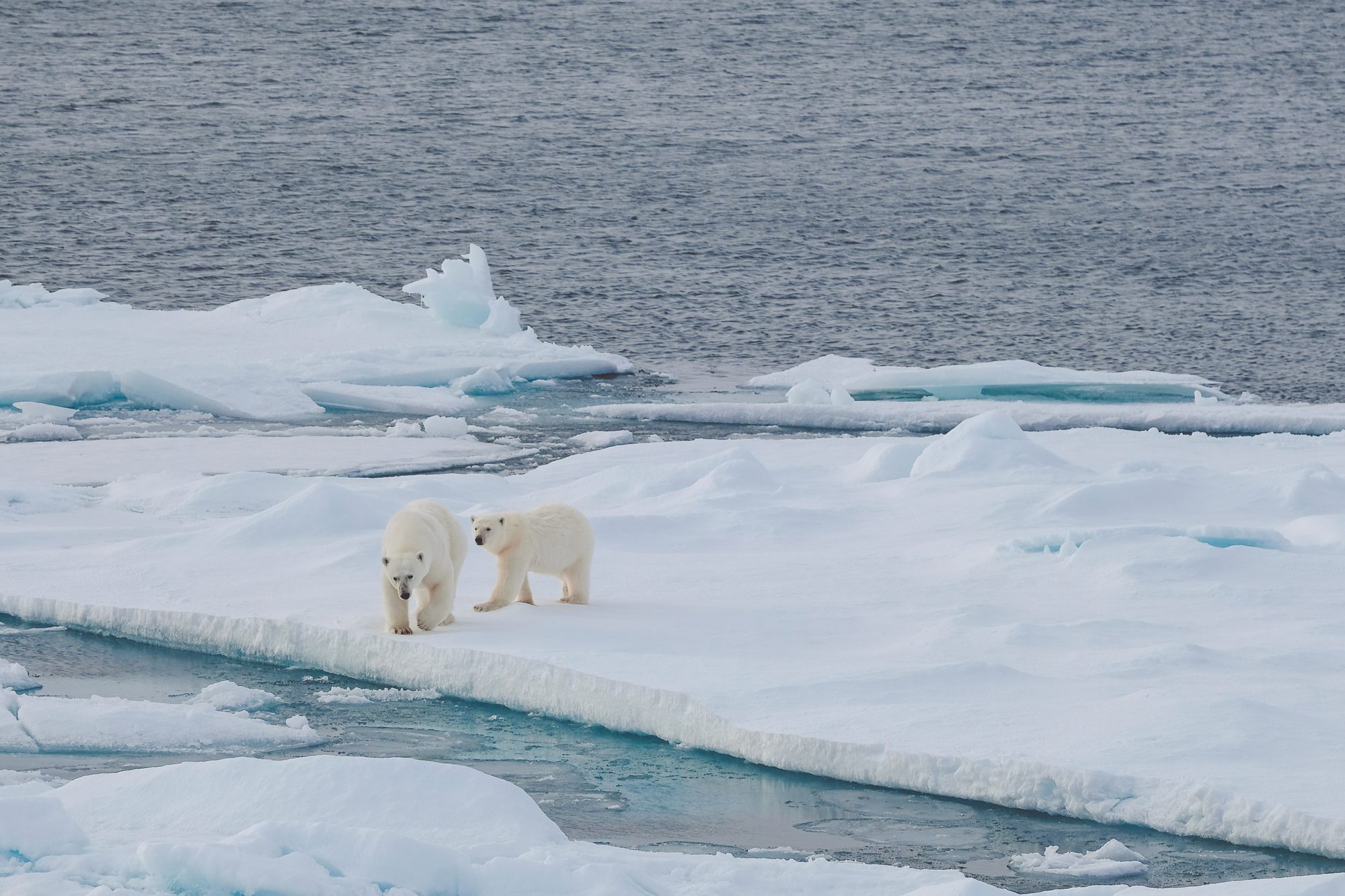
The Arctic has only just opened to visitors, pack ice is still widespread and the scenery is at its purest and most dramatic. You may see polar bears hunting seals with their cubs, walrus haul-outs, seabirds on their eggs, reindeer and Arctic hares. The midnight sun brings daylight around the clock, which is ideal for photography, diving and snorkeling. Best for travelers after ice landscapes and wildlife photography.
- Mid-July to mid-AugustHigh Arctic summer and abundant wildlife
This is the warmest period in the Arctic. The ice retreats over large areas and some itineraries can circumnavigate Svalbard. Look for Arctic foxes hunting, minke whales, humpback whales and belugas, wildflowers in bloom across the tundra, and glaciers calving into the sea. The midnight sun continues. Best for first-time Arctic travelers and for those who prefer warmer weather and a full circumnavigation.
- Mid-August to mid-SeptemberAutumn colors and the first auroras
The midnight sun ends, but the days are still long. With less pack ice, ships can reach more areas. Polar bears hunt seals, walruses show off their young, and reindeer graze on moss and sedge. The tundra turns autumn colors, making this an ideal time for hiking and photography. On the east coast of Greenland there is a chance of seeing the northern lights. Best for travelers who want autumn scenery, aurora viewing and hiking photography.
Polar travel is less physically demanding than most people imagine. If you can get in and out of a Zodiac unaided and walk on slippery ground, you will usually be fine. Swimming is not required — every Zodiac carries life-saving equipment — but basic mobility and fitness are recommended. Guests with serious cardiovascular or cerebrovascular conditions, or with limited mobility, should consult a doctor before travel and let our consultants know.
Safety in polar travel is well covered. Every major cruise line has extensive experience sailing in the polar regions, and ships carry a professional expedition team, a medical room and a full set of safety equipment. Before each landing, expedition team members scout the site, mark out the route and accompany the group throughout. We also provide every guest with a detailed pre-departure safety briefing and packing list.
Chinese guests usually board in Ushuaia, Argentina, which requires an Argentine visa. Holders of a US B1/B2 visa can currently enter Argentina visa-free for stays of up to 30 days. Our consultants guide you through the visa process from start to finish, and some voyages also depart from Punta Arenas in Chile. We recommend starting preparations 3 to 4 months in advance.
It depends on the itinerary. Svalbard is visa-free for Chinese citizens, but you normally transit through Norway or Iceland, which requires a multiple-entry Schengen visa. Boarding in Iceland also requires a Schengen visa. Itineraries that call at Greenland require a Greenland endorsement, which is reviewed by the Danish Embassy. We provide detailed visa guidance throughout.
Costs vary considerably by itinerary, cabin category and season. A 12-day Antarctic Peninsula voyage is typically RMB 70,000–150,000; Arctic voyages range from RMB 40,000 to 100,000. Fares generally include accommodation on board, meals, shore excursions and expert lectures, but exclude international flights and visa fees. Early-bird bookings enjoy preferential rates.
Antarctica: penguins (gentoo, Adélie and chinstrap penguins, among others), seals, whales and albatrosses. Arctic: polar bears, walruses, Arctic foxes, reindeer and seabird colonies. The species you see depend on the itinerary and the season, and our expedition team members provide expert commentary.
The core value of an expedition ship lies in “getting deep into the destination” rather than “luxury on board”, but comfort is fully assured. Cruise lines differ in their facilities and positioning, and our consultants can match you with the right ship and itinerary. Please get in touch.
Yes. Most voyages accept children aged 5 and over, and some have dedicated youth expedition programs. Our Nansen Camp is a Nordic nature camp designed specifically for families with children. We recommend talking to a consultant to choose the right itinerary and dates for your family.
Polar ecosystems are fragile, but responsible travel keeps the impact to a minimum. Cruise lines strictly follow the environmental guidelines of IAATO (the International Association of Antarctica Tour Operators) and AECO (the Association of Arctic Expedition Cruise Operators). We champion a “leave no trace” approach to travel, and every voyage includes environmental education.
3. Nordic Travel
We have our own subsidiary in Norway and work directly with the Nordic tourist boards, Hurtigruten, and local camps, estates, hotels and transport operators. Nothing is subcontracted through a middleman. Because we control these resources ourselves, we can build more flexible custom itineraries, offer better prices and provide faster support on the ground.
1. Norwegian coastal voyages (northbound or southbound, 5–12 days) — chasing the northern lights (aurora borealis), crossing the Arctic Circle and exploring Lofoten. 2. Nansen Camp family learning programmes — three series: winter, mountain and coast. 3. Skjoldemose Estate — a 350-year-old Danish noble estate, themed around the world of Hans Christian Andersen. 4. Multi-country itineraries across the Nordic region. 5. Iceland-only itineraries.
The aurora season runs from September to March, and the odds are highest between November and February. The winter northbound voyages we recommend sail north of the Arctic Circle, and Tromsø is one of the best places in the world to watch the northern lights. The aurora is a natural phenomenon, so no sighting can ever be guaranteed. What we can do is choose the periods and locations with the highest probability, which gives you the best possible chance.
Nansen Camp is named after the Norwegian polar explorer Fridtjof Nansen, and it is a genuine nature camp. It is designed for young people aged 8 to 16 and for families travelling with children, and built around one idea: getting close to nature. Between Norway's mountains and sea, children live outdoors and learn about the natural world and how to protect it. Unlike a conventional study tour, Nansen Camp is about stepping into the local way of life rather than ticking off sights.
Yes. We tailor itineraries to your family's needs, your interests and your travel dates. Whether it is the northern lights combined with a camp stay, a voyage paired with an in-depth stay at the estate, or a music-themed voyage for a corporate group, our advisors will design it around you.
4. South America
Our South America programmes are built around our Antarctic voyages and cover Brazil, Argentina, Chile, Peru, Bolivia and other South American countries.
Our main itineraries include South America + Antarctica in 38 days, and Argentina + Antarctica + Peru in 25 days.
Some South American cities do have crime, but the risk is manageable with basic precautions: do not display valuables, avoid going out alone at night, and leave valuables in the hotel safe. Most of our itineraries are cruise-based, so safety on board is assured. Ashore, we recommend travelling with company and using licensed guides.
Absolutely, and it is what many of our guests choose. A typical South America + Antarctica combination looks like this: fly to Buenos Aires, travel through Argentina, then continue to Ushuaia to board your ship for Antarctica. On your return you can extend to Peru, Brazil or Chile. Allow 15–20 days, and our advisors will design the whole sequence for you.
It depends on which country you are visiting, as policies differ from one to the next. If you are visiting several countries, you need to meet each country's visa policy separately. Our advisors can give you specific advice for your situation. The requirements by country are set out below. (Information valid as of 2026.)
- ArgentinaChinese citizens holding an ordinary passport and a valid US B1/B2 visa (there is no minimum validity requirement — the visa simply has to be valid on arrival) may enter Argentina visa-free for tourism or business, and may stay 30 days per entry.
If you do not meet these conditions, you will need to apply for an Argentine tourist visa.
- PeruCitizens of the People's Republic of China who meet either of the following conditions do not need a tourist or business visa:
- Hold a visa for the United States, Canada, the United Kingdom, Australia or a Schengen country, valid for at least six (06) months.
- Hold permanent residency in the United States, Canada, the United Kingdom, Australia or a Schengen country.
The maximum stay is one hundred and eighty (180) calendar days, taken in a single visit or accumulated over several visits within (6) months.
If you do not meet these conditions, you will need to apply for a Peruvian tourist visa.
- ChileHolders of an ordinary Chinese passport may enter Chile visa-free if they hold an APEC Business Travel Card, a US green card, or a US visa (C-category transit visas do not qualify) or Canadian visa with more than 6 months of validity remaining on arrival.
If you do not meet these conditions, you will need to apply for a Chilean tourist visa.
- BrazilFrom 11 May to 31 December 2026, citizens holding an ordinary Chinese passport may enter Brazil visa-free for up to 30 days per stay, for tourism, business, transit, and artistic or sporting activities.
- UruguayOn 4 June, at an event at the Chinese Embassy in Montevideo, Uruguayan Foreign Minister Lubetkin officially announced visa-free entry for Chinese citizens holding an ordinary mainland Chinese passport. Effective date: the authorities have not yet announced when this takes effect. The Uruguayan government will publish the detailed rules and the start date later; until then, the current entry rules still apply.
Since 15 August 2017, Chinese citizens holding an ordinary private passport and a valid EU, US, Canadian or UK visa have been able to enter without a visa, subject to conditions: 1. the passport must be valid for more than 6 months and in good condition; 2. the EU, US, Canadian or UK visa must have at least one year of validity on arrival; 3. Chinese citizens whose visa from one of these countries is of a type valid for less than 18 months may enter at any time; 4. conditional visa-free entry allows a stay of up to 90 days, with multiple entries permitted; 5. ports of entry: Carrasco International Airport in the capital, the Port of Montevideo and the Port of Colonia — land borders are not covered for now.
If you do not meet these conditions, you will need to apply for a Uruguayan tourist visa.
- ColombiaUnder a document issued on 12 August 2024, holders of an ordinary Chinese passport who also hold a US visa or a Schengen visa may enter Colombia visa-free, provided that visa has more than 180 days of validity remaining on arrival. Visa-free stays in Colombia are limited to 30 days.
If you do not meet these conditions, you will need to apply for a Colombian tourist visa.
5. Africa
Our Africa programmes are about depth, not ticking off sights. We focus on a few themes: watching the Great Migration in East Africa, luxury tented camps in southern Africa, and cultural journeys in North Africa. In line with our commitment to sustainable travel, we choose local partners who invest in their communities and in conservation.
The migration between the Serengeti in Tanzania and the Maasai Mara in Kenya continues all year, but the most spectacular moment — the Great Migration river crossings, when the wildebeest plunge into the water — usually falls between July and September. January and February are the calving season, when you can see large numbers of newborns. Every period has its own highlights, and we will recommend the best window based on what you want to see.
Some African destinations do carry a malaria risk, but it can be prevented effectively by taking prophylactic medication, using insect repellent and wearing long sleeves. We provide a detailed health guide before departure and recommend that you consult a travel medicine clinic. Some of the high-end camps we work with are in malaria-free areas, and we are happy to recommend those first.
At reputable camps, safari activities are driven and led by professional guides who follow strict safety protocols, so the risk is very low. We only recommend camps and operators that have passed rigorous vetting, so our guests are completely safe even when watching wildlife at close range.
6. Booking & Travel
There are three ways to book: (1) call us on +86 156 0049 1995 or +86 010 6508 9861; (2) add our WeChat account NansenCampAS; (3) email han.wenjing@travogue.cn. A travel consultant will recommend the right trip for your needs and guide you through the booking.
For polar voyages and popular destinations, we recommend booking 6-12 months ahead. The best cabins go quickly, especially in the Antarctic season (October to March), the Arctic season (June to September) and the northern lights season (September to March). The process runs: initial consultation, confirm the voyage and cabin type, pay a deposit to secure your place, sign the contract, pre-departure preparation, departure.
Payment is usually made in two parts: a deposit when you book, and the final balance 60-120 days before departure.
Cancellation terms vary by trip and by supplier. Refunds are normally calculated on a sliding scale, according to how far before departure you cancel. We strongly recommend that guests take out travel insurance that includes trip-cancellation insurance, to cover cancellations you cannot foresee. The exact refund terms are set out in your contract.
Inclusions differ from trip to trip. What is covered on any given trip is set out in the itinerary and the contract, and your travel consultant can send you the details on request.
7. Safety & Support
(1) Every polar vessel has a medical clinic on board that can handle common medical emergencies, with contingency plans in place for anything beyond that. (2) On long-haul trips, our local staff and partners provide prompt support on the ground. (3) Before you travel, we give you a 24-hour emergency hotline.
In extreme weather, our first priority is your personal safety. We also work hard to find alternatives, and we ask for your understanding when the itinerary has to change as a result. Changes caused by force majeure are handled according to the terms of your contract and your travel insurance.
We strongly recommend a travel insurance policy that covers: (1) medical expenses, including emergency medical evacuation; (2) trip cancellation and interruption; (3) baggage delay and loss; (4) personal liability. For polar travel, choose a premium policy with higher coverage limits. Our consultants can recommend a plan that suits you.
8. Sustainability & Our Philosophy
We see travel as more than a personal experience. It is also a responsibility towards the environment and the communities of the places we visit. From the day it was founded, TRAVOGUE has focused on building environmental thinking into its trips, and since the pandemic we have committed even more firmly to sustainable tourism and low-carbon living. We believe that truly good travel means “putting knowledge into practice and sharing a greener way of life”.
(1) Follow the IAATO and AECO Leave No Trace principles. (2) Take part in the citizen science projects run on board, such as bird surveys and ocean data collection. (3) Carry that environmental awareness back into everyday life. Every responsible polar journey is also an education in conservation.
Nansen Camp takes its name from Fridtjof Nansen, the renowned Norwegian polar explorer, scientist and diplomat. Guided by the idea of getting close to nature and learning something new, the camp lets children and parents gain knowledge and outdoor experience in a safe, expertly run setting, and feel what nature has to give. Nansen Camp's vision is to be the most dependable nature camp for families and young children, the broadest in the knowledge it covers and the best at passing that knowledge on. Understanding nature and conservation is at the heart of the experience.